

War does not only destroy buildings and businesses. It tears apart families, separates loved ones, and leaves ordinary people carrying impossible responsibilities.
Athar is one of thousands of Sudanese women whose lives changed overnight when conflict engulfed Sudan in April 2023. Today, she lives as a refugee in Uganda, where she is responsible for feeding, protecting, and caring for thirteen members of her extended family.
Her story reflects the reality faced by many Sudanese refugee women who have become heads of households after losing everything to war.
Life Before the War
Before the conflict began in April 2023, Athar and her family lived in El Obeid, North Kordofan.
Her husband owned a business that supported the whole family. Life was not perfect, but they worked hard and were able to provide for themselves.
My name is Athar. Before the war, my husband was a businessman in North Kordofan, El Obeid. We were a big family in Sudan. When the war erupted in 2023, our business was looted by the armed group.
Like thousands of Sudanese families, they suddenly found themselves without an income and without any certainty about the future.
A Family Torn Apart
As the violence intensified, families being targeted, homes being looted and families no longer feel safe Athar’s two brothers decided to join the RSF as way of protecting their family from abuse and being targeted.
We were all living in the same house, my family, my mother, my aunt, and my two brothers’ families. Armed groups would come and take people’s belongings by force. If anyone tried to stop them, they would beat them, insult them, and threaten them. We heard of young girls being raped in front of their parents. We were living in fear every single day.
Seeing this, Athar’s two brothers believed the only way to protect their family is to join RSF.
We are joining the RSF so they will not abuse our family. If they see that we are with them, maybe they will leave our family alone.
When the security situation continued to deteriorate, the brothers evacuated the family to Uganda for safety.
They took us to the border between Sudan and South Sudan. Before we left, they told us, ‘Go to Uganda. We will send you money every month so you can buy food until things become safe. Then you can come back home
Three Years Now
When Athar arrived in Uganda, she believed the separation from her husband and brothers would only be temporary. She trusted their promise that they would stay in touch and send money every month to help care for the family until it was safe to return home. But that promise never came true.
Athar now carries the responsibility of caring for thirteen family members on her own.
We came to Uganda three years ago, and since then I have been responsible for a family of thirteen people. We are all women and children, my elderly mother, my elderly aunt, my brothers’ wives, and their children. No money came as they promised us. No calls. No contact from them. We don’t even know how they are.
Rebuilding Through Small Business
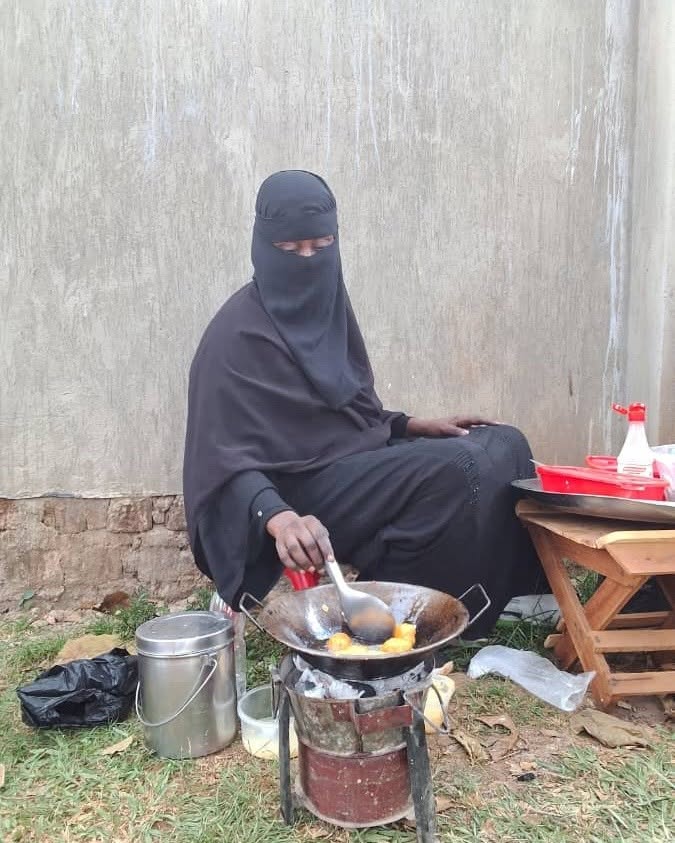
Despite everything she has lost, Athar refuses to give up, she started a small business selling falafel and sandwiches inside the refugee settlement.
I do business selling falafel and sandwiches so that I can put food on the table for this big family.
Her determination reflects the remarkable resilience shown by Sudanese women who continue rebuilding their lives despite displacement and hardship.
The Hidden Cost of War
Athar’s experience reflects the broader humanitarian crisis affecting millions of Sudanese civilians.
According to the United Nations, the conflict in Sudan has displaced millions of people both inside the country and across neighboring states, making it one of the world’s largest displacement crises. Families have lost homes, businesses, livelihoods, and contact with loved ones.
Women have been forced into new roles as heads of households while caring for children, older relatives, and family members affected by conflict. Behind every statistic is a family like Athar’s family trying to rebuild life after unimaginable loss.
International Humanitarian Law
International humanitarian law requires all parties to an armed conflict to protect civilians and civilian property.
The looting of civilian businesses and attacks that force families to flee violate fundamental principles of international humanitarian law, including the protection of civilians established under the Geneva Conventions.
International human rights law also recognizes every person’s right to an adequate standard of living, including access to food, housing, and healthcare. During armed conflict, these rights are often severely undermined, leaving displaced families dependent on humanitarian assistance.
How TRAID Is Supporting Sudanese Refugees
Trauma Rescue Aid (TRAID) works alongside Sudanese refugee families in Uganda by providing:
Emergency food assistance
Psychosocial support and counselling
Child-friendly spaces and art therapy
Documenting stories of survivors.
Community outreach and protection services
Families like Athar’s remind us why these programs are so important.
Humanitarian assistance cannot erase the pain of war, but it can help families survive while they rebuild their lives with dignity.
A Call to Stand with Sudanese Families
Athar’s story is not unique.
Thousands of Sudanese mothers now carry responsibilities they never imagined. They continue to protect children, care for elderly relatives, and search for ways to survive despite losing homes, businesses, and loved ones.
The international community must continue supporting humanitarian organizations providing lifesaving assistance to Sudanese refugees while working toward lasting peace and accountability for violations committed against civilians.
No mother should have to choose between buying medicine for her elderly parent and feeding a hungry child.
No family should remain forgotten because of war.
By standing with Sudanese refugee families, we help ensure that people like Athar are not left to face these challenges alone.
Comments are closed