

The armed conflict in Sudan has forced millions of people to flee their homes, leaving children among the most affected. Many have lost family members, access to education, and the safety every child deserves.
In response to these challenges, Trauma Rescue Aid (TRAID) provides psychosocial support and art therapy to refugee children living in Uganda. Through creative expression, children are encouraged to share their experiences, rebuild confidence, and begin healing from the trauma of war.
Currently, 114 Sudanese refugee children participate in TRAID’s art therapy programme, which is conducted twice every week. The programme provides a safe environment where children can express emotions that are often difficult to communicate through words.
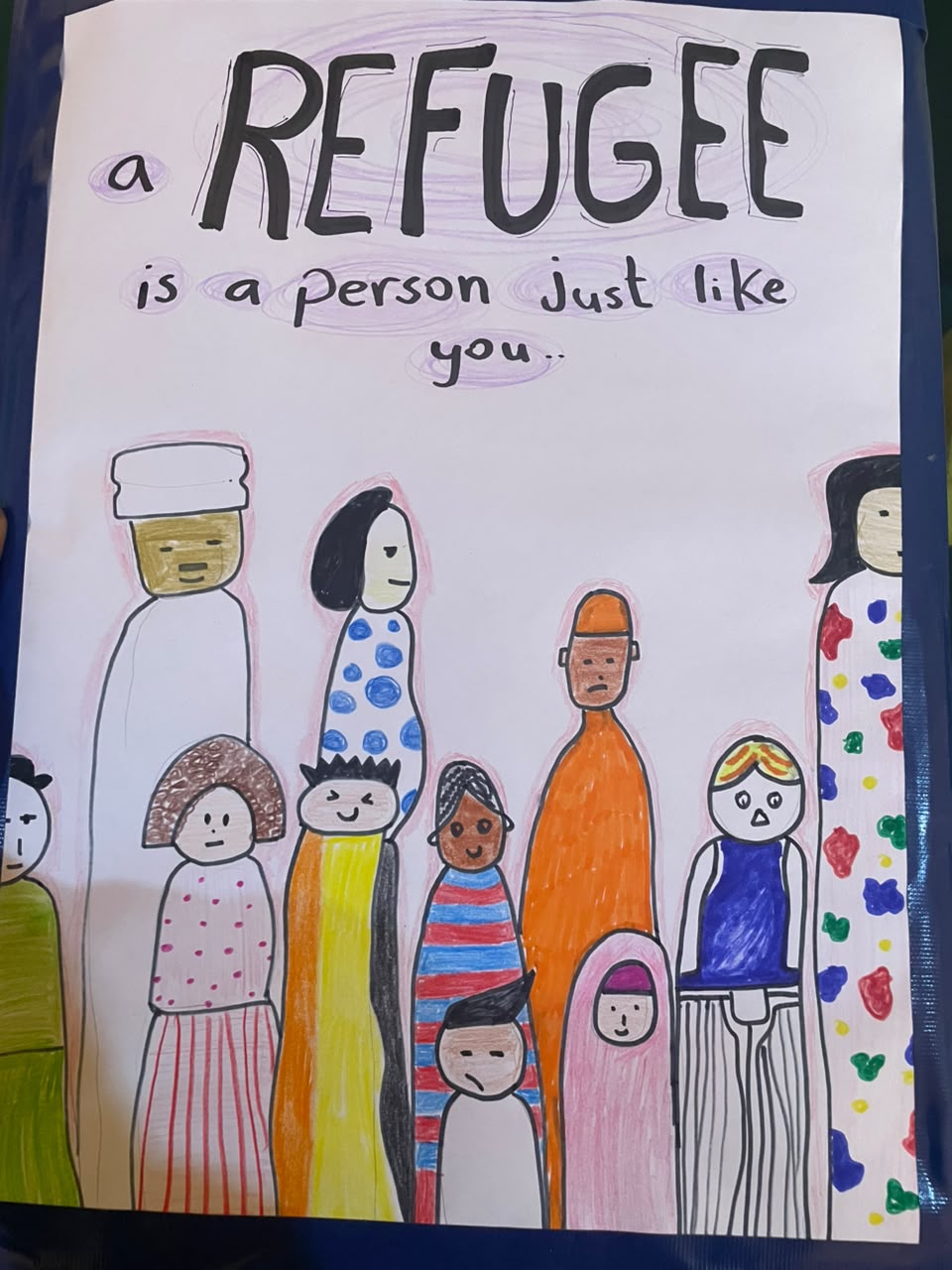
“A refugee is a person just like you.”
Her artwork has become a symbol of resilience and a reminder that every refugee child deserves dignity, protection, education, and hope.
The conflict in Sudan has had devastating consequences for children. Families have been displaced, schools destroyed, and many children have witnessed violence or been separated from loved ones.
Displacement affects more than physical safety. It also impacts children’s emotional well-being, learning, social development, and future opportunities.
Many children arriving in refugee settlements show signs of trauma, including fear, anxiety, sadness, withdrawal, and difficulty concentrating in school.
Without appropriate support, these experiences can have long-term effects on children’s mental health and development.
TRAID’s Response
Trauma Rescue Aid (TRAID) works with refugee children to help them recover from the emotional effects of conflict.
One of the organization’s key interventions is art therapy, delivered alongside psychosocial support.
The programme creates safe spaces where children can:
Express their emotions through drawing and painting.
Build confidence and self-esteem.
Develop positive relationships with other children.
Strengthen communication skills.
Reduce stress and anxiety.
Rediscover creativity and hope.
Art allows children to communicate experiences that are often too painful or difficult to describe with words.
Programme Statistics
As of June 2026, TRAID’s child-focused programme includes:
114 Sudanese refugee children enrolled in regular art therapy sessions.
Two sessions every week, providing consistent psychosocial support.
Children aged 6–15 years participating in creative learning and emotional healing activities.
Activities integrated with child protection, psychosocial support, and education initiatives.
The programme continues to grow as more displaced families seek support.
A Child’s Voice Through Art
During one of the art therapy sessions, a 14-year-old Sudanese refugee girl living in Uganda created a drawing carrying the message:
“A refugee is a person just like you.”
Her artwork reminds us that behind every refugee is a child with dreams, talents, and ambitions.
Like many children affected by the Sudan conflict, she did not choose displacement.
War interrupted her education, separated her from the life she knew, and forced her to seek safety in another country.
Yet through art, she found a way to tell her story.
Rather than drawing violence, she chose to speak about humanity.
Her message challenges stereotypes and encourages people to see refugees not as labels, but as individuals deserving of dignity and equal opportunities.
Why Art Therapy Matters
Children affected by armed conflict often struggle to explain what they have experienced.
Creative activities provide an alternative way for them to express emotions, process painful memories, and regain confidence.
Research and humanitarian practice have shown that structured psychosocial activities contribute to children’s emotional recovery, resilience, and social development.
For many children attending TRAID’s programme, art has become a pathway toward healing.
Legal and Human Rights Framework
The United Nations Convention on the Rights of the Child (CRC) affirms that every child has the right to life, development, education, protection from violence, and the highest attainable standard of health without discrimination. States are also required to ensure appropriate care and protection for all children within their jurisdiction.
Article 22 of the Convention on the Rights of the Child specifically recognises that refugee children are entitled to appropriate protection and humanitarian assistance.
The 1951 Refugee Convention recognises education as a fundamental right for refugees. Access to education helps protect children from child labour, exploitation, early marriage, trafficking, and recruitment by armed groups.
These international commitments reinforce the importance of programmes that combine education, psychosocial support, and child protection.
Call for Action
The needs of children affected by the Sudan conflict continue to grow.
TRAID calls upon governments, humanitarian agencies, donors, civil society organizations, and the international community to increase pressure on Sudanese government to stop the war protect children. free from violence.
Comments are closed