

Detailed Food Distribution Report – Seeta, Mukono
Date: Saturday, 13 December 2025 Location: Seeta, Mukono District, Uganda
1. Overview
On Saturday, 13 December 2025, Trauma Rescue Aid (TRAID) conducted a comprehensive food distribution exercise for refugee households at our refugee support center in Seeta, Mukono District, Uganda. The activity successfully reached 400 refugee household families, with every registered household receiving food assistance.
The distribution was organized in response to persistent food insecurity among refugees from Sudan, many of whom are living in urban and peri-urban settings with limited access to livelihoods, food assistance, or consistent humanitarian support. The majority of beneficiaries included women-headed households, families with young children, elderly persons, and survivors of conflict-related trauma.
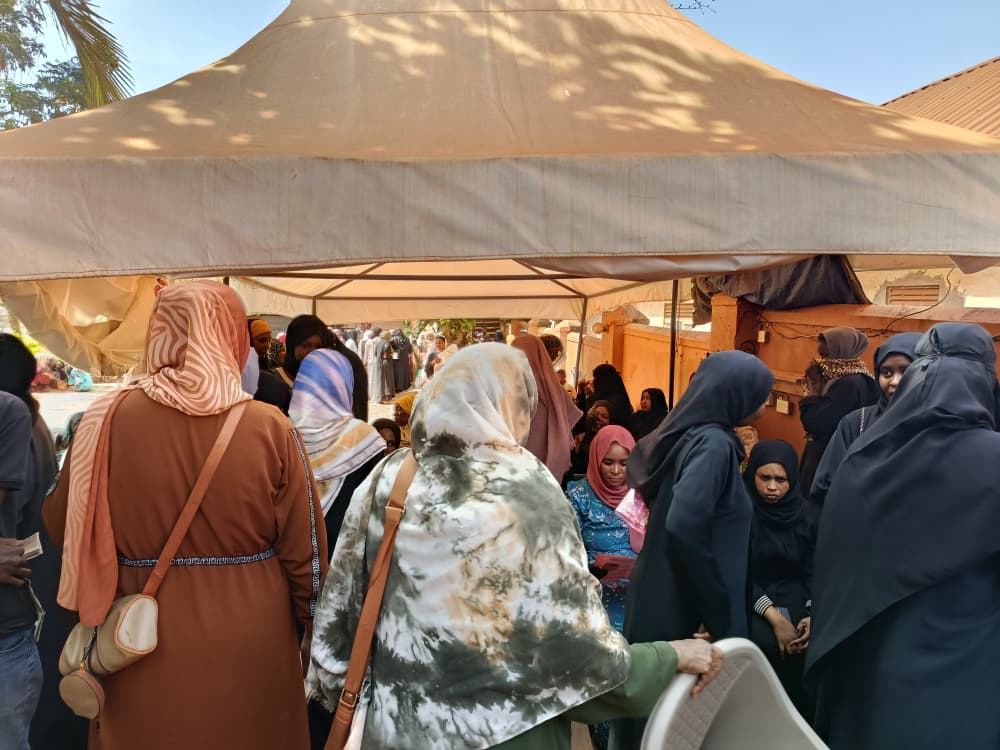
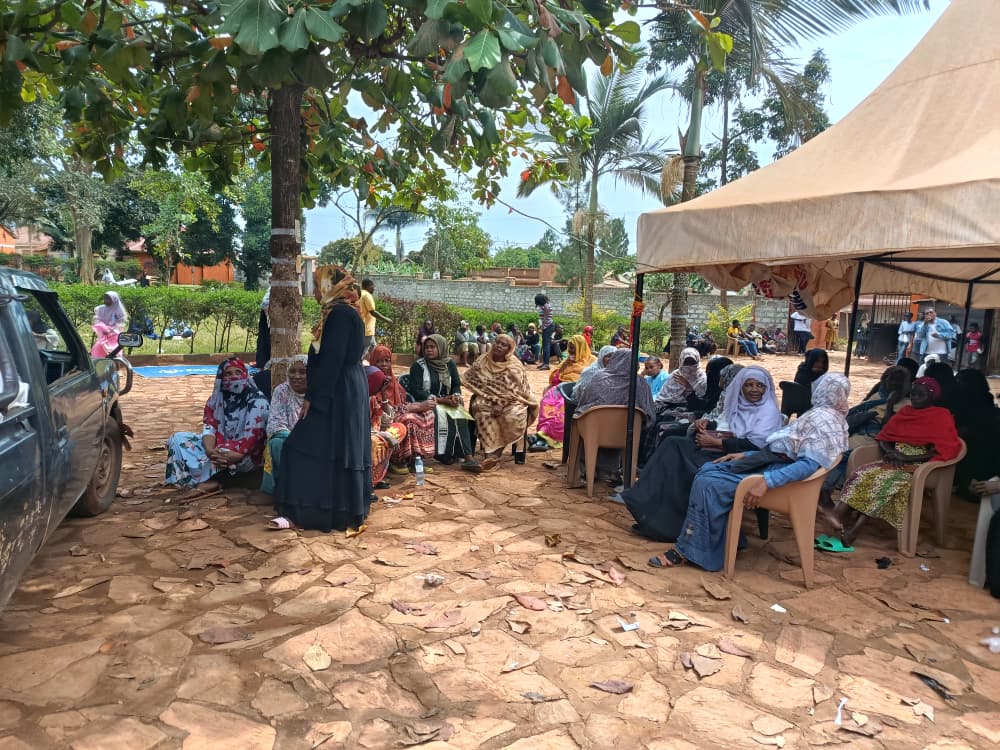
The exercise was carried out in a calm, orderly, and dignified manner. Beneficiaries expressed visible relief and happiness, noting that the support arrived at a critical time. This intervention reaffirmed TRAID’s commitment to standing with displaced communities and responding to urgent humanitarian needs as they arise.
2. Background and Context
Refugee families residing in Seeta and the wider Mukono area continue to face increasing hardship. Many households rely entirely on irregular humanitarian assistance, casual labor, or community support to survive. Reductions and suspensions of food assistance by larger agencies have left significant gaps, particularly for refugees living outside formal settlements.
TRAID’s food distribution program seeks to address these gaps by providing emergency and short-term food support while advocating for longer-term solutions that promote dignity, resilience, and self-reliance.
3. Objectives of the Distribution
The key objectives of the 13 December 2025 food distribution were:
To provide immediate food assistance to refugee households facing hunger and food insecurity.
To ensure equitable and dignified access to food for all registered families.
To reduce negative coping mechanisms, such as skipping meals or taking on harmful debt.
To strengthen trust and engagement between TRAID and the refugee community.
4. Purchased items
For this distribution, TRAID procured food supplies sufficient to fully cover all registered households.
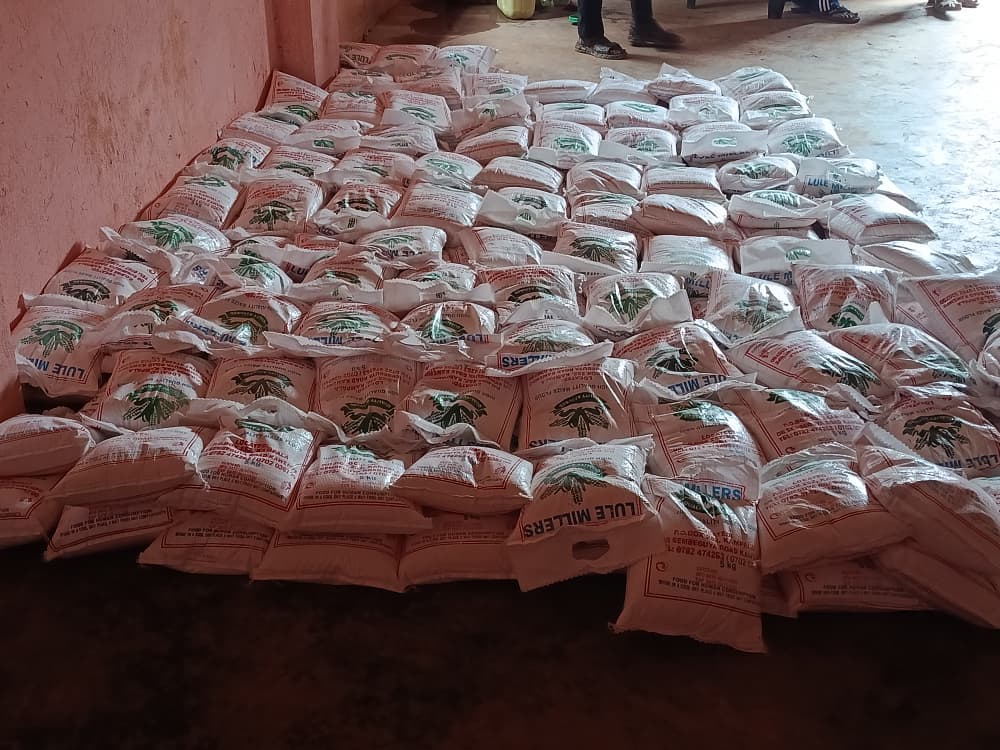
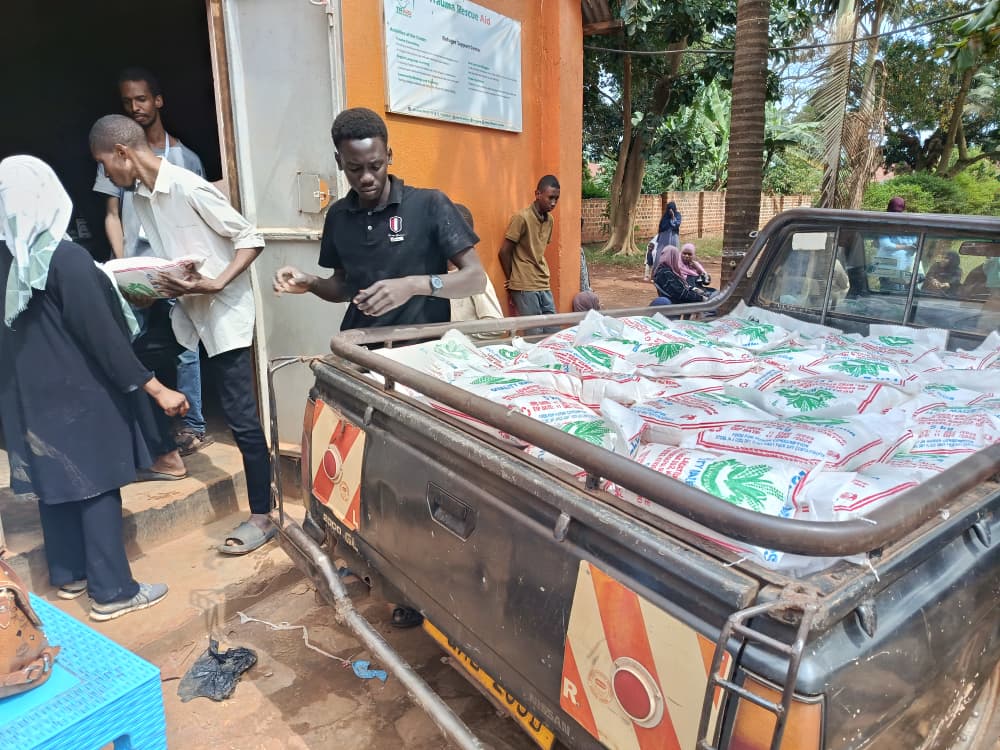
Maize flour distributed to 400 household families.
All food items were purchased locally where possible, inspected for quality, and prepared in advance to ensure smooth and fair distribution on the day of the activity.
5. Organization and Implementation of the Distribution
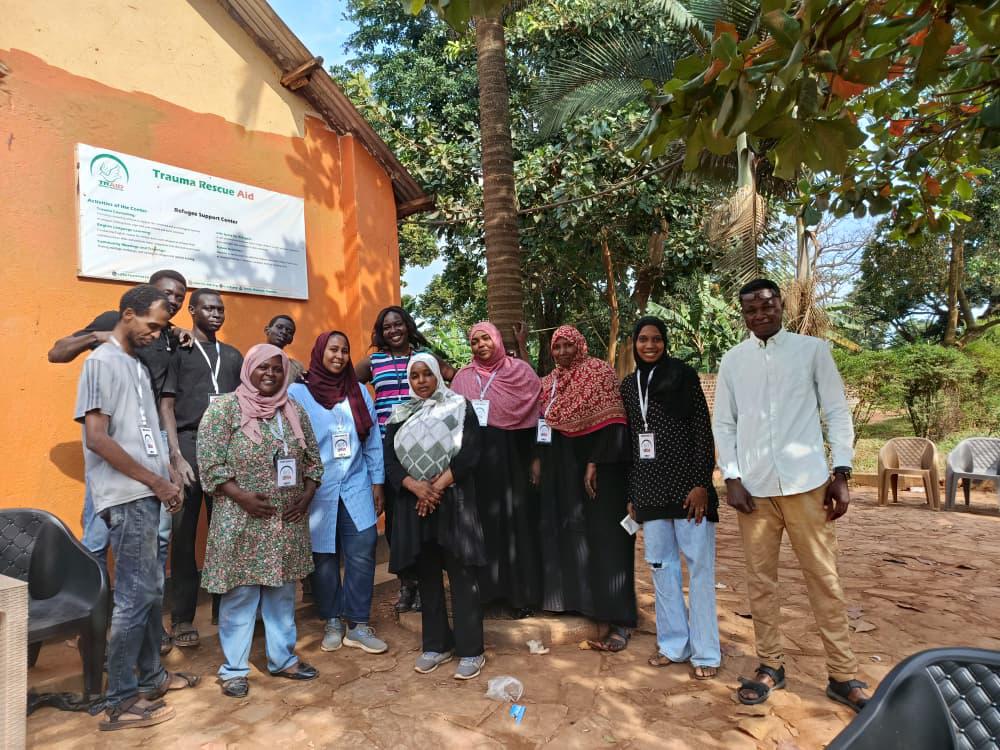
The distribution process was carefully planned and implemented by the TRAID on-ground team with support from volunteers.
Key steps included:
Verification of beneficiaries using TRAID’s updated household registration database.
Clear communication with community representatives ahead of the distribution day.
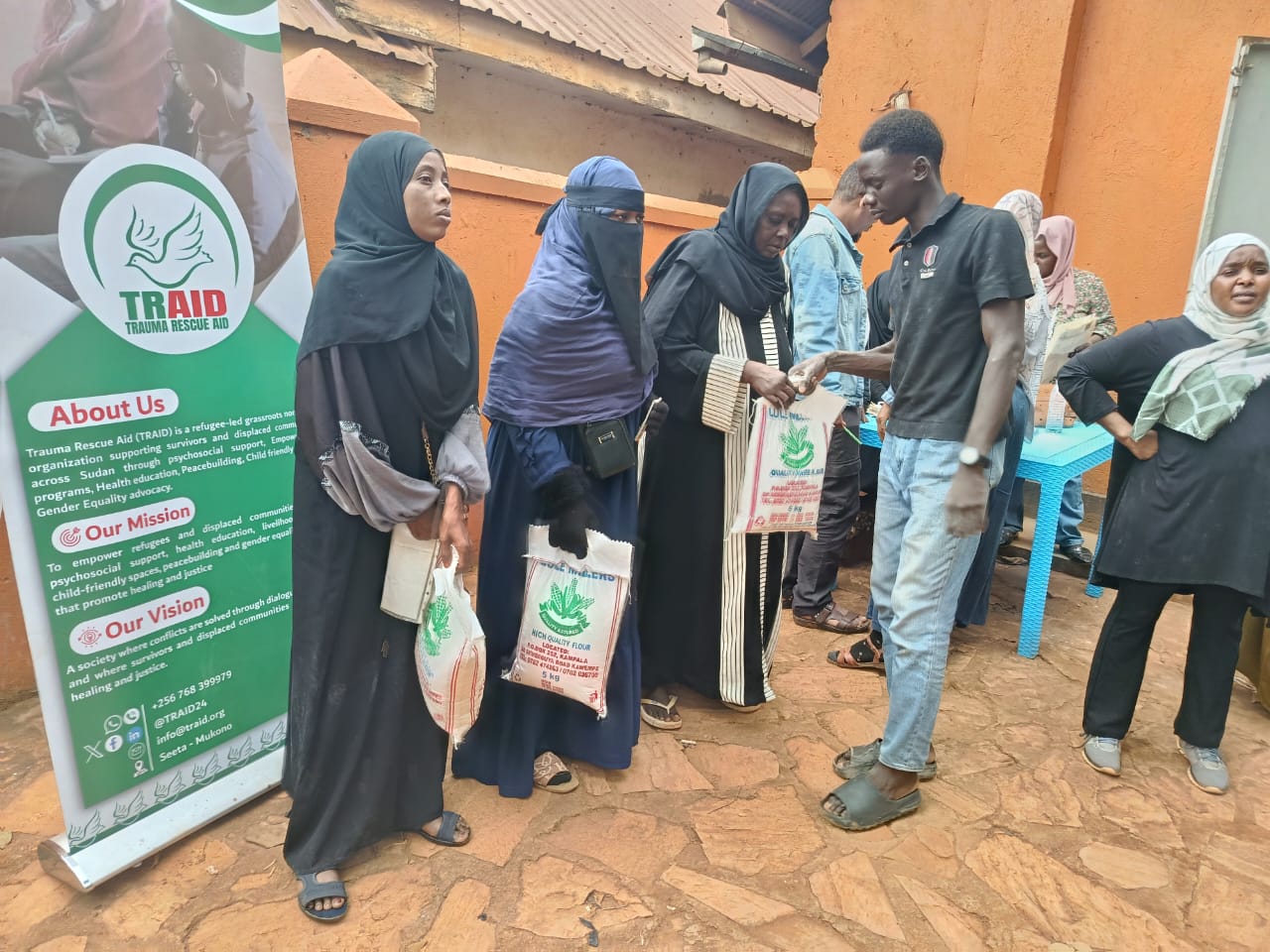
Structured queuing and household-by-household verification to prevent duplication or exclusion.
Priority support for vulnerable individuals, including elderly persons, pregnant women, persons with disabilities, and caregivers with infants.
The distribution proceeded without disruption, shortages, or incidents. All 400 registered households received food assistance, and no family was turned away.
6. Distributed items
Food assistance: Maize flour distributed to 400 refugee household families.
The quantity provided to each household was intended to support families for several weeks, depending on household size and consumption patterns.
7. Beneficiary Reach and Coverage
Total households registered: 400
Total households served: 400
Coverage achieved: 100% of registered households
This full coverage represents a significant achievement in a context where demand often exceeds available resources.
8. Achievements and Outcomes
Successfully delivered food assistance to 400 refugee households.
Achieved complete coverage of all registered beneficiaries.
Conducted a transparent, peaceful, and dignified distribution process.
Improved short-term food security for vulnerable refugee families.
Strengthened community trust and participation in TRAID-led interventions.
Many beneficiaries reported immediate relief and expressed happiness and gratitude, noting that the assistance would help stabilize their households during a difficult period.
9. Community Feedback and Observations
Community members responded positively to the distribution. Families expressed appreciation for TRAID’s consistency, fairness, and respectful approach. The atmosphere during the activity was calm and hopeful, with beneficiaries openly sharing words of thanks and encouragement with staff and volunteers.
For many households, receiving food without uncertainty or exclusion restored a sense of dignity and reassurance that their struggles are seen and acknowledged.
10. Challenges and Risks
Although the distribution was successful, several broader challenges remain:
Increasing numbers of refugees continue to settle in Seeta and surrounding areas.
Many households lack stable income sources and remain highly vulnerable to food shortages.
Sustaining regular food distributions depends on continued donor support and funding availability.
These challenges highlight the need for predictable resources and long-term programming alongside emergency assistance.
11. Lessons Learned
Early preparation and clear communication with the community contribute to smooth and dignified distributions.
Updated beneficiary registration systems are essential for achieving full coverage and accountability.
Community-based approaches remain critical where larger humanitarian systems fall short.
12. Appreciation
The TRAID on-ground team sincerely thanks all donors, partners, and supporters who made this distribution possible. Your generosity directly supported 400 refugee families and helped restore stability and hope at a critical time.
Your continued trust enables TRAID to respond effectively to urgent humanitarian needs within displaced communities.
13. Call for Continued Support
While this distribution reached every registered household, the overall need remains high. Refugee families continue to face daily challenges related to food access, shelter, health, and protection.
TRAID calls on individuals, institutions, and partners to continue supporting our food assistance and humanitarian programs. With sustained support, we can expand our reach, respond to new arrivals, and ensure that refugee families are not left behind.
Together, we can continue to stand with refugees and support pathways toward dignity, recovery, and hope.
SEO Keywords
Comments are closed