
Testimonies from Children Who Survived the War in Sudan”
War doesn’t explain itself to children. It doesn’t stop to offer political context or military briefings. It arrives as the sound of gunfire, the sudden silence of a parent who left and didn’t return, the moment everything safe becomes dangerous.
Since April 2023, the conflict in Sudan has forced millions of people to flee. More than half are children. They aren’t numbers. They’re boys and girls who had homes, routines, school uniforms, and friendships. Children who should have been worried about homework, not survival.
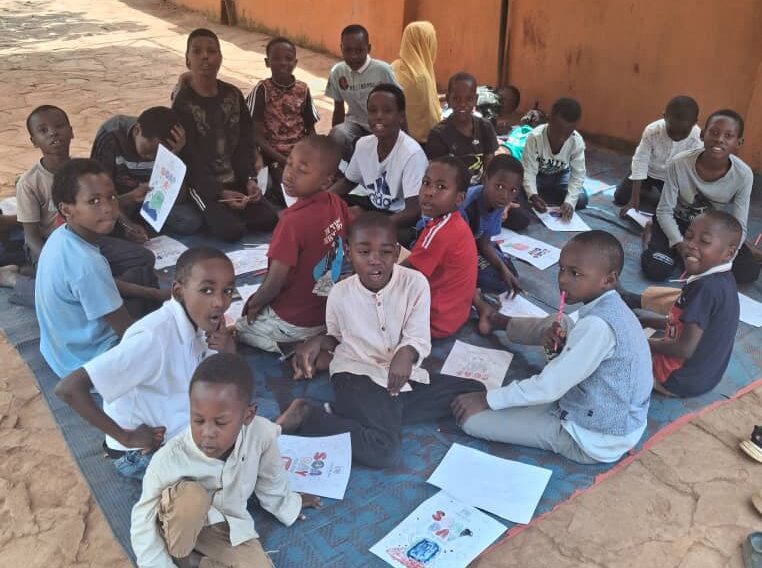
This report shares what some of these children told us, not through formal interviews, but through drawings. In Trauma Rescue Aid’s psychosocial support sessions, children were given paper, crayons, and a quiet space. No instructions. No pressure. They simply drew what was already living in their minds.
What they shared is difficult and painfully clear. These drawings are direct testimonies from children aged 5 to 9, many of them survivors of violence and displacement. And maybe they’re asking the world to pay attention.
How These Drawings Came to Be
These artworks were created during TRAID’s child-friendly psychosocial support sessions with displaced Sudanese children. Creative expression and basic art therapy are part of how TRAID helps young survivors begin to process trauma safely.
Participation was voluntary. Each child explained their drawing in their own words when they finished. We kept their descriptions exactly as they said them. Only first names and ages are used to protect their privacy. Families agreed for these stories to be shared so the world could understand what Sudan’s children are living through.
What the Children Drew
Abaq, 9 years
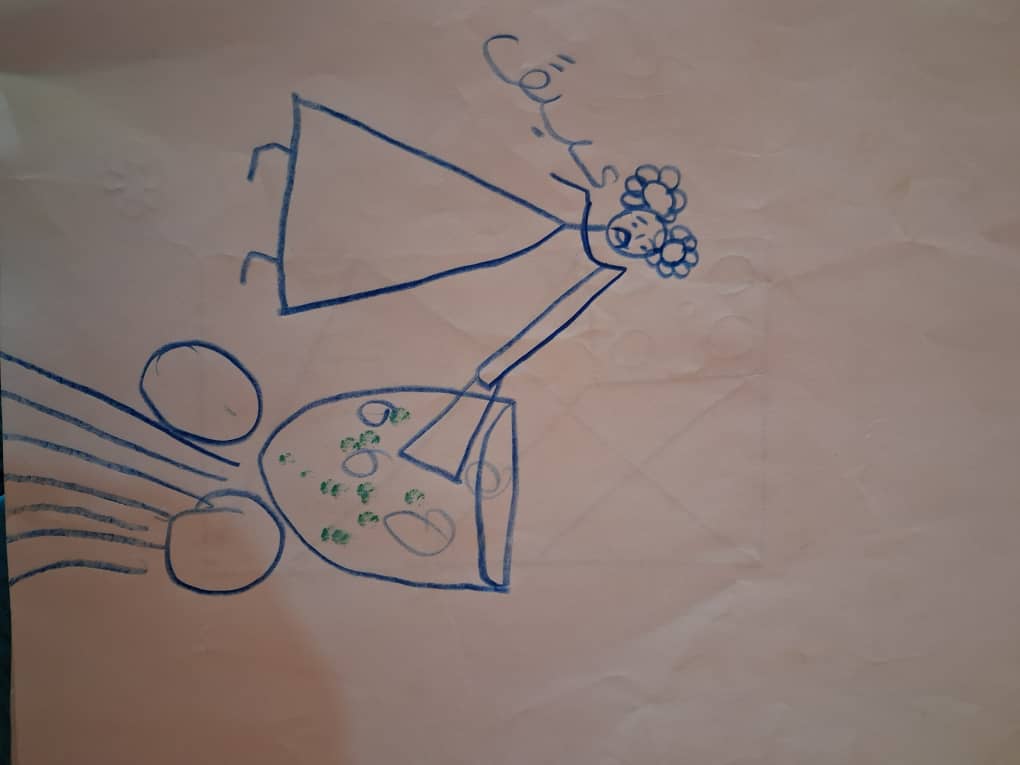
Abaq drew herself crying beside cooking tools. She’s 9.
Her mother and grandmother, the people who would have taught her gently and protected her, were killed. Now she cooks alone every day on a charcoal stove and burns her legs often. She’s carrying grief and responsibility far beyond her age.
Tahani, 6 years
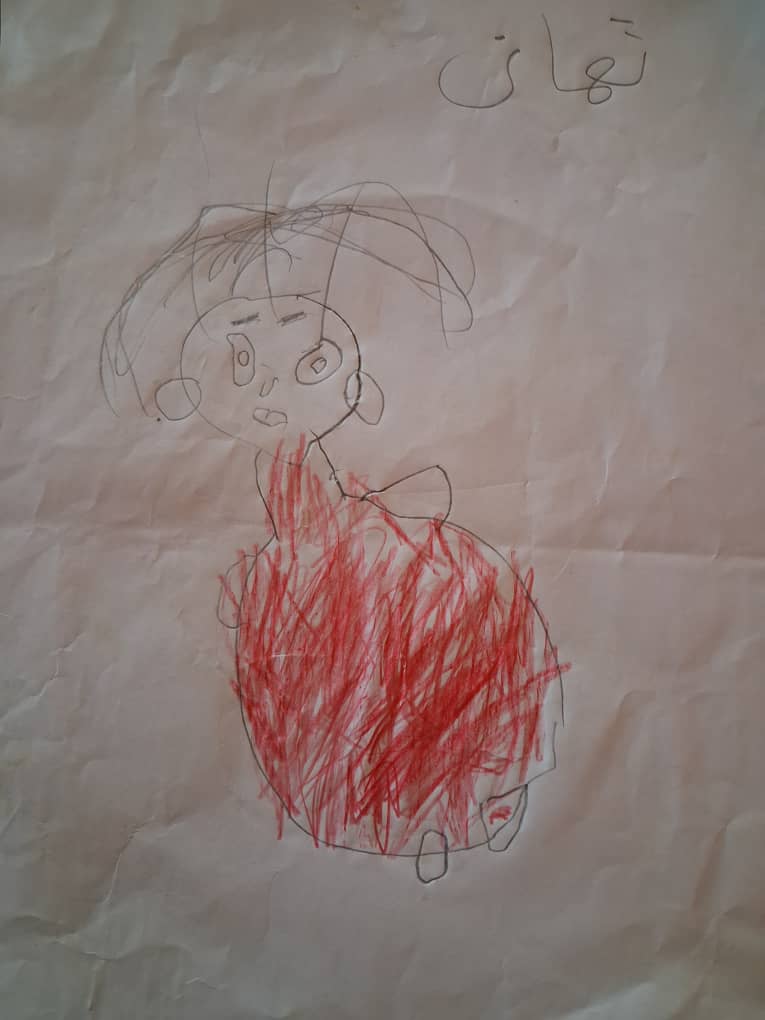
Tahani’s drawing is filled with red. Heavy strokes covering the small figure she says is herself.
This is a nightmare she still has, not something from long ago. Whatever she witnessed or lived through follows her into sleep.
Muhja, 6 years
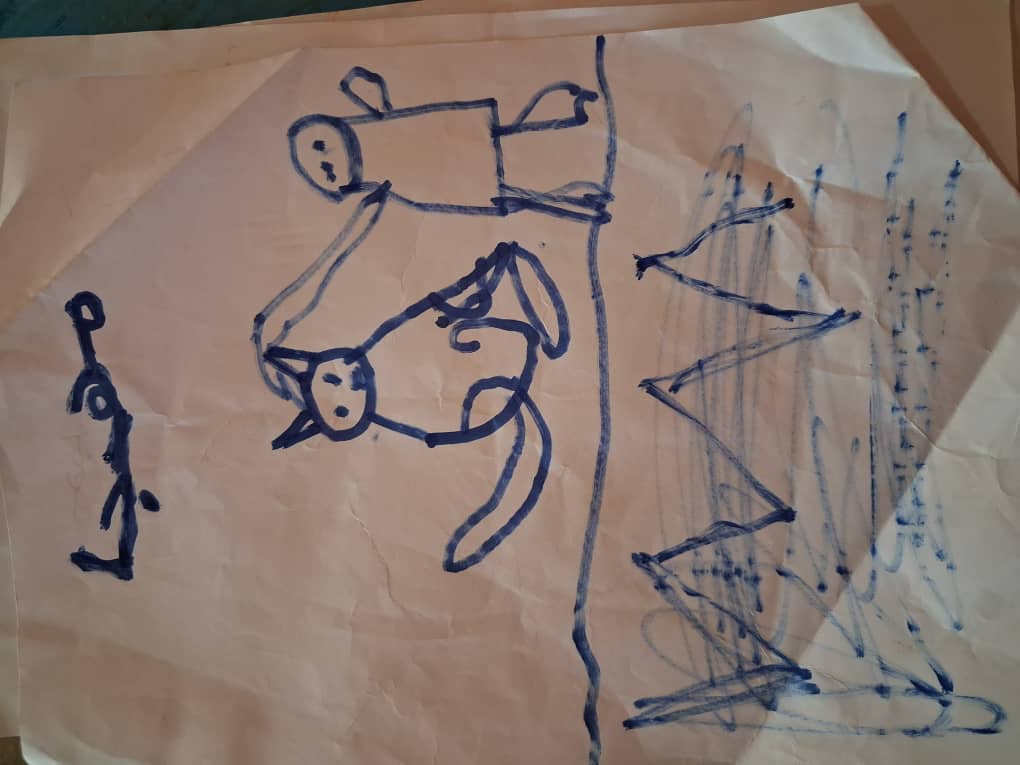
When families flee, they take only what they can carry. There’s rarely space for pets.
Muhja drew her cat. Not her house or belongings. Her cat. The animal she loved and had to leave behind while running for safety. For her, displacement means losing a companion she still misses deeply.
Ahmed, 5 years
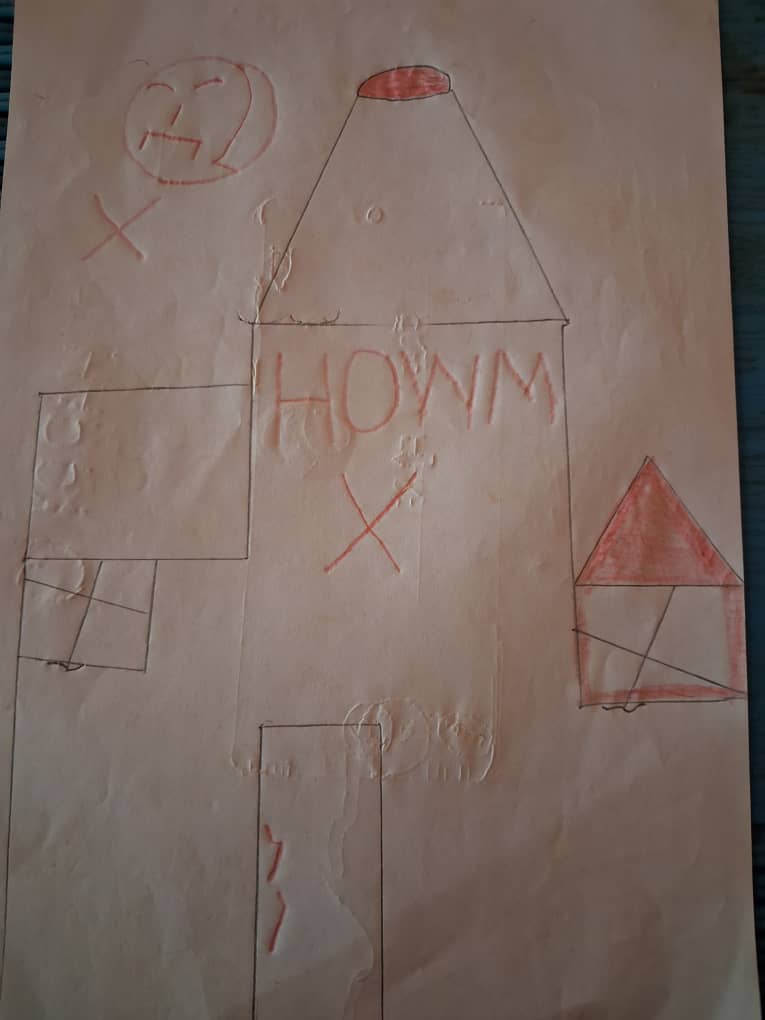
Ahmed is 5.
He drew a house labeled “HOME” and a figure he said was his father. Those were the pillars of his world. Both are gone now. The drawing feels like an attempt to hold on to memories before they fade.
Azzam, 8 years
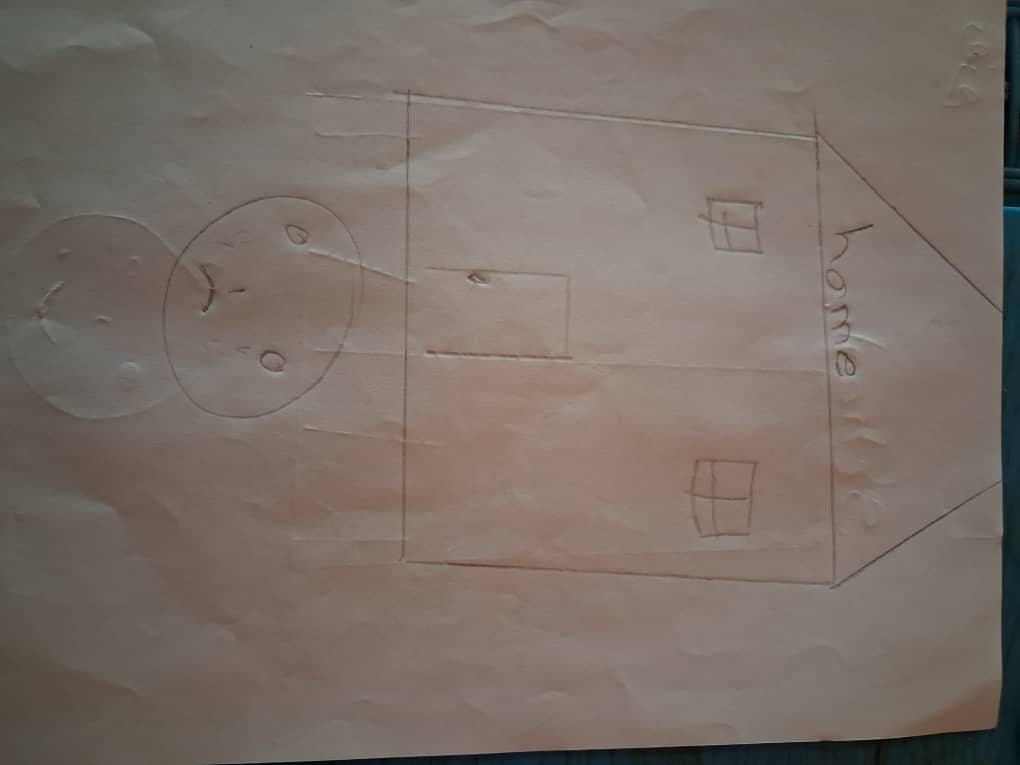
Azzam drew himself next to the outline of a house. The lines look faint, like a memory slipping away.
He remembers Sudan clearly, but he has no power to return. All he can do is miss it.
What This Means
The drawings are direct testimonies
These children may be young, but their messages are clear. They know exactly what they lost and what scares them. They simply don’t have adult language to describe it, so they use pictures instead.
Children are carrying adult responsibilities
Abaq is cooking for a whole family at age 9. That means the adults in her life are overwhelmed, missing, or gone. This is what war does: it forces children into roles they are not ready for.
Trauma doesn’t end when violence stops
Tahani’s repeated nightmares show how trauma follows children long after they escape physical danger. Without ongoing psychosocial support, these wounds stay open.
Displacement is personal, not abstract
Children remember small, specific things: a pet, a home’s shape, a parent’s presence. When they lose these, the world stops feeling safe or predictable.
What Needs to Happen
Children need ongoing psychosocial support
Art sessions help, but they are only a start. Each of these children needs sustained mental health and psychosocial support (MHPSS) to heal from trauma, nightmares, grief, and stress.
Families need resources and protection
When little girls are cooking alone or children are left to manage their own fear, it means families are stretched beyond their limits. They need shelter, safety, and basic stability.
Accountability matters
These children lost parents because of violence. They ran because adults with weapons made decisions that harmed them. Justice matters because it shows children that what happened to them was wrong.
Final Thought
These children picked up crayons and told the truth of what war did to them. They didn’t hide it or soften it. They drew burns, blood, lost homes, missing parents, and beloved pets left behind.
Comments are closed