

Trauma Rescue Aid’s 2-week livelihood program combines income-generating skills with trauma healing support, serving as a model for Refugee-women IGA empowerment initiatives.
For two weeks, Trauma Rescue Aid (TRAID) conducted a transformative Henna skills training program for 31 Sudanese refugee women in Seeta, Mukono. Most participants were survivors of gender-based violence and single mothers who lost their partners during the ongoing conflict in Sudan.
With recent humanitarian funding cuts affecting refugee communities across Uganda, many families struggle to meet basic needs. This program aims to provide practical income-generating skills while creating a safe, therapeutic space for healing and community connection, helping refugee-women.
Building Skills and Healing Trauma
The training integrated two critical objectives for refugee women’s empowerment: supporting emotional healing through creative expression, and peer connection, while building marketable skills that enable women to generate income independently and support their families. This holistic approach fosters empowerment through both economic and emotional avenues.
“Henna wasn’t just art in this context,” explained program facilitators. “It became a doorway to community, dignity, and hope for women rebuilding their lives after displacement and loss.”
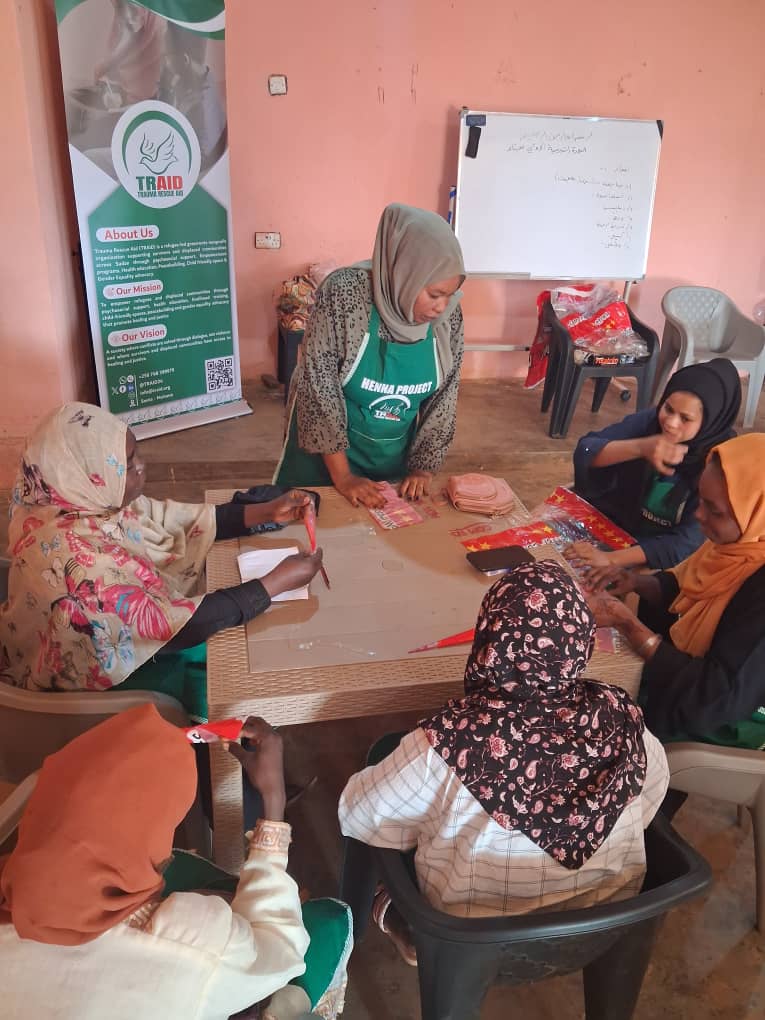
Training Program Details. 2. Purpose of the Training
The training had two main goals:
To support emotional healing through a calm, creative activity that encourages focus, connection, and confidence, while contributing to refugee-women’s
To build a livelihood skill that can help women earn income to support their children
Henna, in this case, wasn’t just art. It became a small doorway to community, rest, and dignity, and a tool for Refugee-women aiming for economic resilience.
Technical Skills:
- Natural Henna paste preparation and application techniques
- Pattern design from simple to advanced styles
- Bridal and cultural design traditions
- Professional hygiene and client service standards (key for women’s IGA empowerment through Refugee-driven skills development)
Business Development:
- Pricing and marketing strategies
- Customer service and communication
- Starting a home-based Henna business further supports Refugee-women’s IGA empowerment objectives
Psychosocial Support:
- Peer support group sessions
- Community building activities offer additional Refugee-women empowerment opportunities through collaboration
- Mindfulness through creative practice
The training environment balanced skill development with emotional support. Participants described moments of deep concentration—”like therapy”—interspersed with laughter and shared encouragement that helped lighten the trauma burdens many carried, further aiding Refugee-women IGA empowerment efforts.
Results: 100% Success Rate
All 31 women successfully completed the training program, achieving remarkable outcomes connected to Refugee-women IGA empowerment:
- Professional skills gained: Participants learned to create high-quality Henna designs ready for client services
- Business confidence: Many women expressed readiness to offer Henna services at community events, weddings, and from their homes—a significant step for IGA empowerment among refugee-women
- Peer networks formed: Women established ongoing practice groups for continued skill development and mutual support
- Emotional healing: Participants reported reduced stress, restored confidence, and renewed hope
- Income opportunities: Several women began receiving service requests during the training period, advancing their journey to IGA empowerment in refugee communities
“One participant told us she never imagined she could learn a skill that people admire so quickly,” shared TRAID staff. “That sense of accomplishment was transformative for her emotional healing journey.”
Mothers shared that the hope of earning income through Henna services gave them renewed strength to support their children, especially during this challenging period of funding cuts affecting refugee assistance programs in Uganda and making Refugee-women IGA empowerment initiatives even more critical.
Overcoming Challenges
While the program achieved strong outcomes, resource limitations required participants to share training materials. Some needed additional time due to concentration difficulties related to past trauma, yet the Refugee-women remained motivated towards IGA empowerment goals through strong peer support.
Building on Success: Next Steps
To maximize impact and sustainability, TRAID recommends further measures targeting Refugee-women IGA empowerment, such as.
- Providing startup kits so participants can begin working immediately
- Facilitating market linkages with event organizers and community networks
- Supporting peer business groups for collaborative work at weddings and community events
- Offering advanced training modules in specialized techniques
- Integrating business skills training with financial literacy and savings groups,
A Model for Sustainable Support
The Henna Skills Training Program demonstrated that even relatively small, focused interventions can carry profound emotional and economic meaning when participants feel genuinely seen, supported, and valued, especially in the context of enhancing Refugee. For women carrying the dual burden of trauma and financial hardship, the combination of skill development and community connection proved transformative.
As humanitarian funding continues to decline, programs like this offer a critical model for sustainable support—building skills and confidence that enable refugee women to support themselves and their families with dignity, independence, and hope through initiatives.
About Trauma Rescue Aid (TRAID): TRAID works with refugee and displaced communities in Uganda, providing psychosocial support, livelihood training, and emergency assistance to survivors of conflict and gender-based violence. Their mission is aligned with expanding across the region.
Comments are closed