

At Trauma Rescue Aid (TRAID), we are currently running a Child Safe Space Program for refugee and internally displaced children affected by the war in Sudan. Our mission is to create and maintain a child safe space in Sudan and Uganda for children in need. The program supports psychological healing, emotional expression, and trauma recovery for war-affected children living in displacement settings.
We are currently working with 205 children in Sudan IDP camps and refugee communities in Uganda (Seeta Mukoko). Sessions are conducted twice a week by trained facilitators using a trauma-informed and child protection approach.
These are children who have experienced extreme hardship. Some have lost parents. Others have been separated from their families. Many are now orphaned due to conflict. Most are out of school, and their childhood has been interrupted by violence and displacement.
This program exists to restore something every child deserves: safety, dignity, and the chance to heal.
Why Child Safe Spaces Matter in Humanitarian Settings
Children in conflict zones are among the most vulnerable. Without protection and psychosocial support, trauma can deeply affect their emotional development, learning ability, and long-term wellbeing.
As stated in the UN Convention on the Rights of the Child (UNCRC):
“Every child has the right to rest and leisure, to engage in play and recreational activities appropriate to the age of the child.”
This principle guides our work. Even in crisis, children are entitled not only to survival, but also to play, expression, and emotional recovery.
About the Child Safe Space
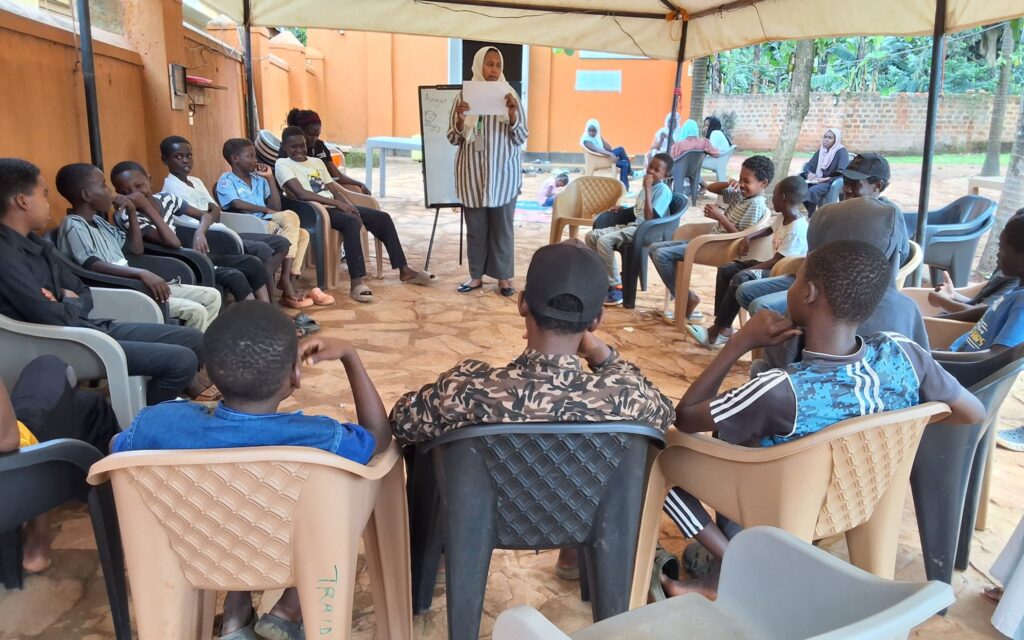
The Child Safe Space is a structured, trauma-informed environment where children are supported to begin healing emotionally and psychologically.
It is a space designed not only for activities, but for expression, safety, and reconnection. Here, children are gently supported to process their experiences in ways that feel safe for them, without pressure and without judgment.
We are currently working with 205 children across Sudan IDP camps and Uganda (Seeta Mukoko). Activities are conducted twice a week with trained facilitators who focus on emotional safety, trust-building, and supportive engagement.
Activities Supporting Child Healing and Emotional Expression
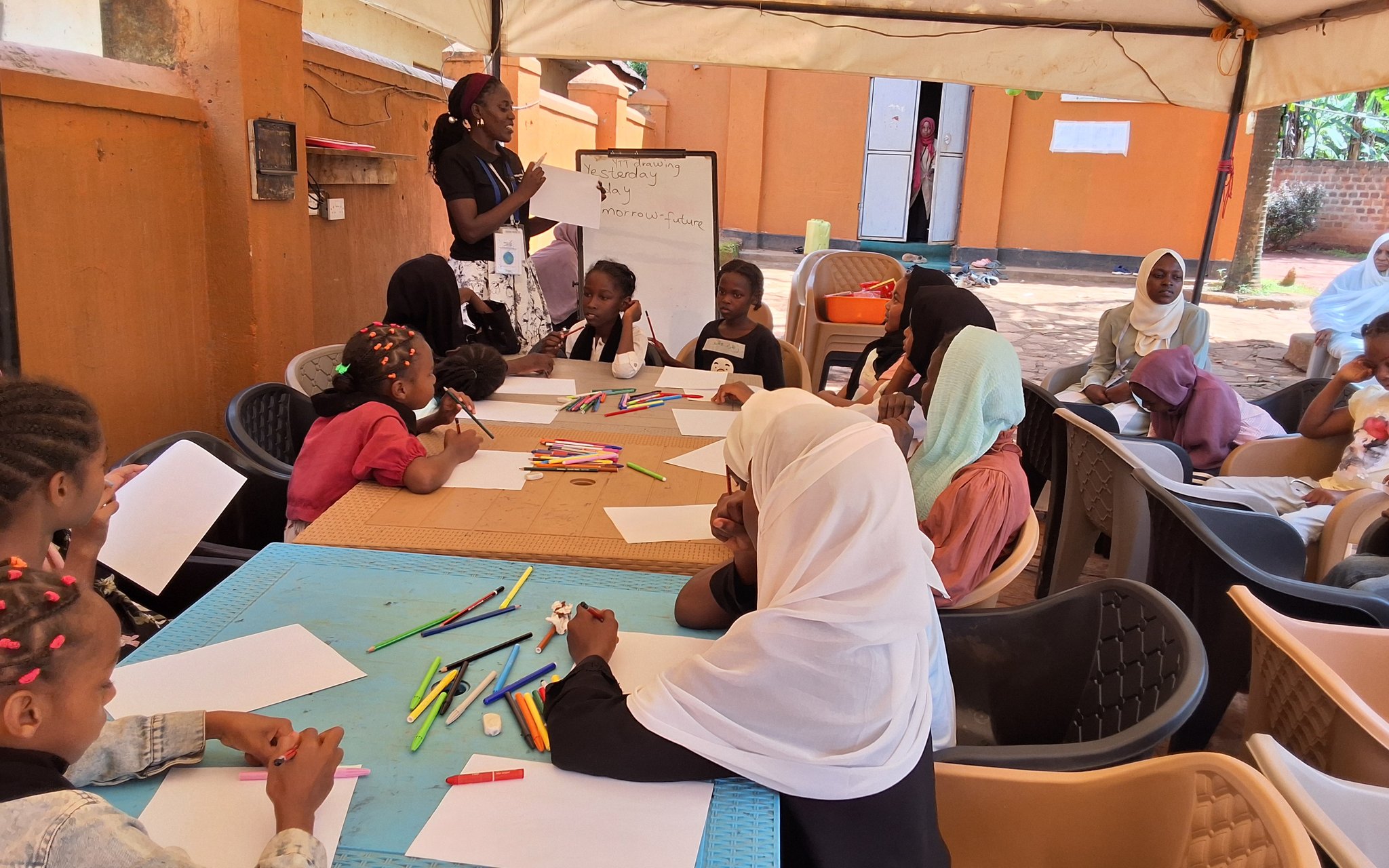
Art, Drawing, and Emotional Expression
Art is one of the most powerful tools children use to communicate what they cannot say in words.
Through drawing, children express memories, fears, loss, and hopes. Some drawings reflect what they witnessed during the conflict. Others show what they miss most, such as school, family life, friends, and home. Many children also draw peaceful futures they long for.
Importantly, we document the stories behind the drawings, capturing the child’s voice in a safe, ethical, and respectful way. These narratives help us understand their lived experiences and preserve their expressions for psychosocial support and advocacy.
Puzzle Games and Creative Learning Activities
We use puzzles and group games to support cognitive development, teamwork, and emotional regulation.
These activities help children rebuild focus, cooperation, and confidence. For many, it is the first structured and safe group interaction they have experienced since displacement.
Storytelling and Memory Sharing
Storytelling is central to emotional healing.
Children are gently supported to share stories about their lives before and during displacement. They often speak about school, family traditions, food, friends, and daily life they miss deeply.
We also carefully document these stories as part of psychosocial support work. This documentation is done with strict safeguarding principles to ensure no harm, dignity, and emotional protection.
The goal is not to relive trauma, but to acknowledge it and create space for healing through voice and recognition.
Early Observations and Impact
While healing is a long and gradual process, we are beginning to see meaningful changes among children who attend regularly.
Some children who were previously silent are beginning to speak and participate. Others are showing improved emotional expression and confidence. Group interaction is slowly increasing, and moments of laughter and connection are becoming more visible.
These are small but important indicators of recovery in fragile contexts.
However, many children still carry deep emotional distress. This is why consistency, trust, and safety remain at the core of our approach.
Our Human Rights-Based Approach
TRAID’s work is grounded in child rights, psychosocial support, and trauma-informed care.
We recognize that every child has the right to:
- Protection from violence and harm
- Education and development
- Play and emotional expression
- Psychological recovery after trauma
- Dignity and care in humanitarian settings
As the global child rights movement reminds us:
“A child is not a vessel to be filled, but a fire to be lit.” — François Rabelais
Our role is not to force healing, but to create the conditions where healing becomes possible.
Why This Work Matters
In Sudan’s conflict context, children are not only losing homes. They are losing safety, identity, education, and childhood itself.
Without intervention, these experiences can remain unprocessed for years.
Child Safe Spaces provide something simple but powerful:
a protected environment where children can begin to feel safe again, express themselves, and reconnect with life beyond survival.
This is where healing begins slowly, through drawing, storytelling, play, and presence.
No responses yet