

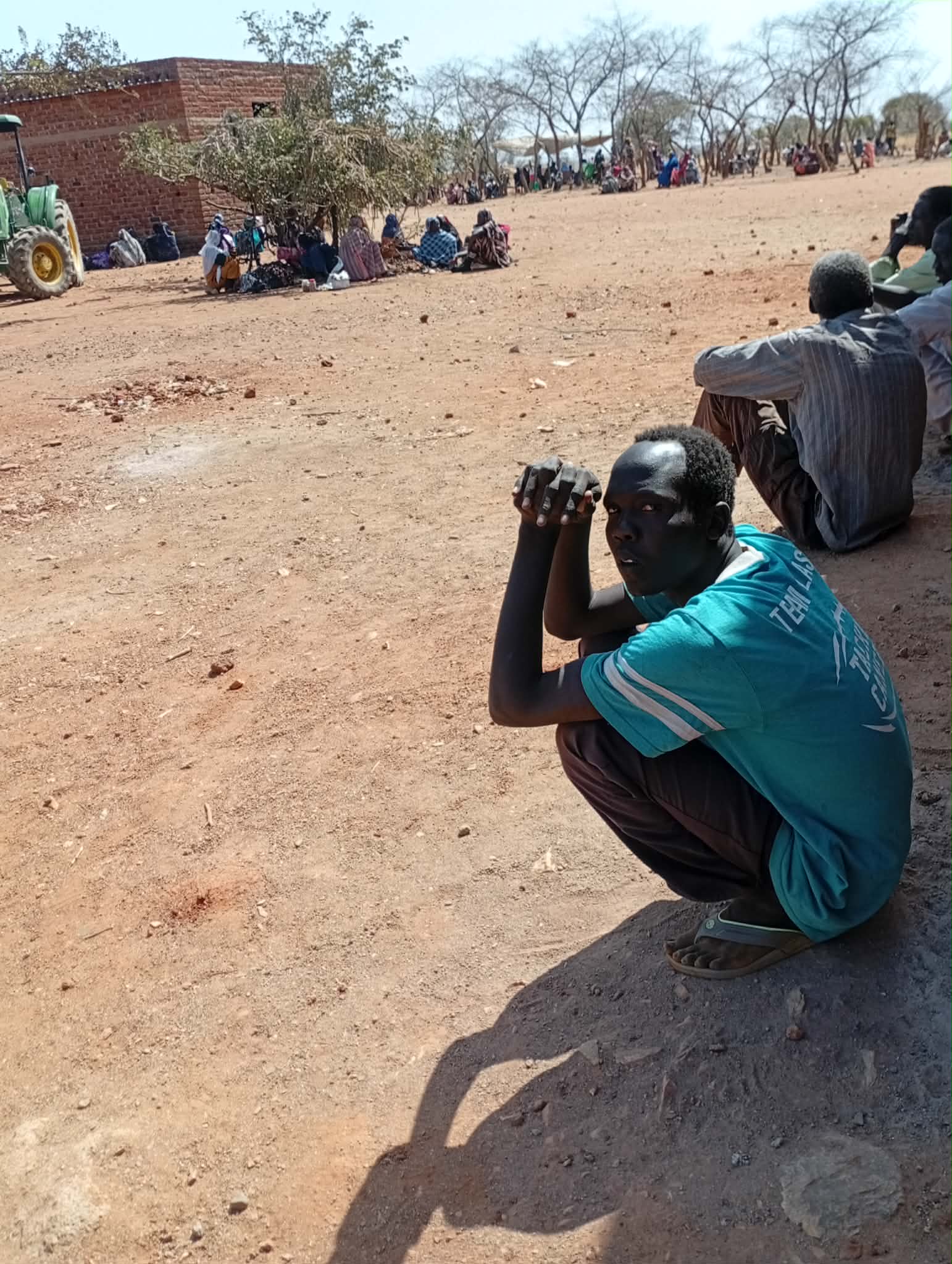
Reports of attacks, detention and worsening living conditions in Darfur and South Kordofan raise serious concerns about civilians’ psychological wellbeing
Families in Sudan continue to suffer after fleeing their homes. Reaching a camp for internally displaced people does not necessarily end their fear. we are raising concerns about drone attacks threatening families even in places where they have sought refuge. Civilians need protection and mental health and psychosocial support, known as MHPSS
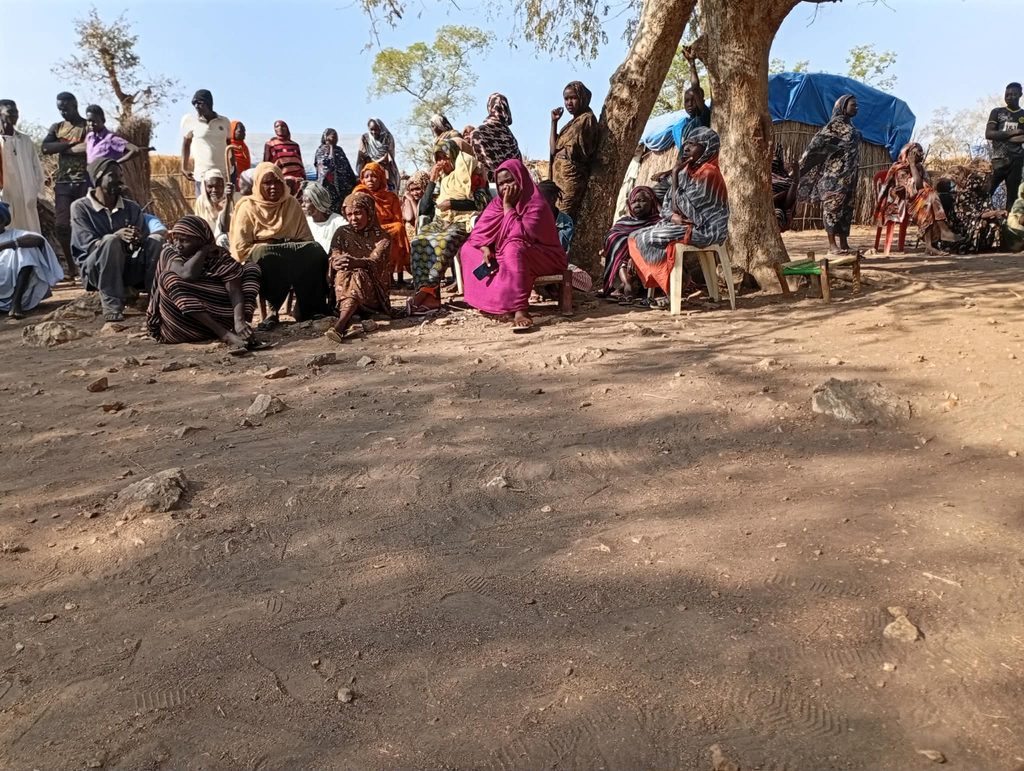
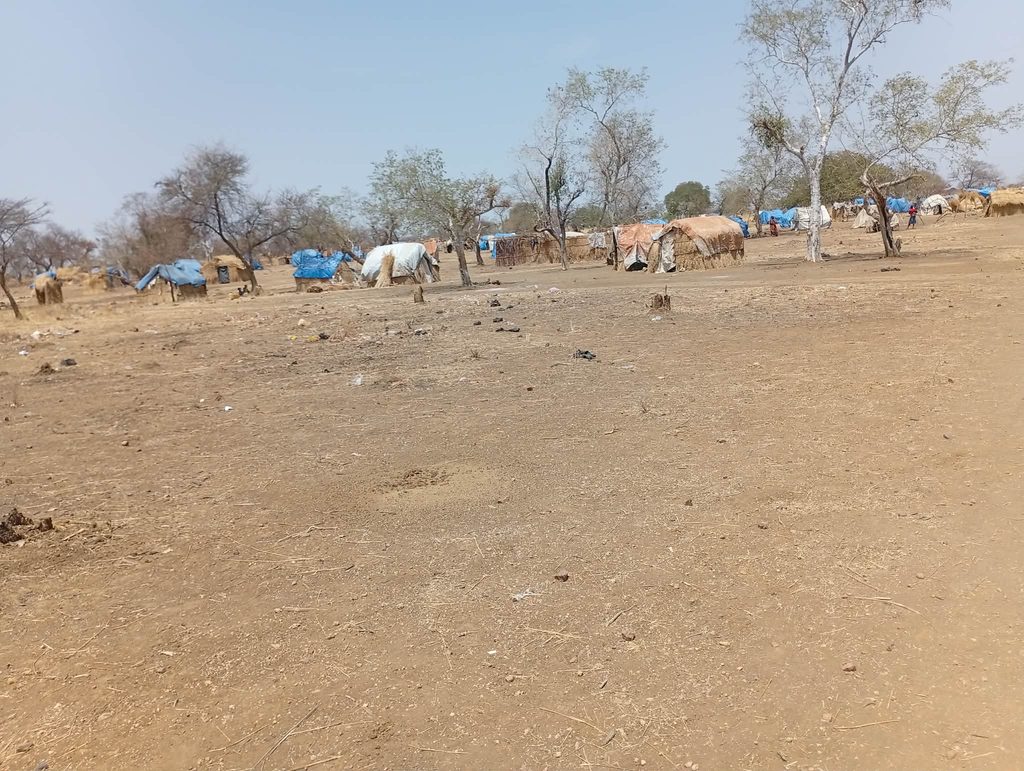
Displaced families in South Kordofan
Fleeing home has not ended the danger
UN reporting shows why displacement sites cannot simply be assumed to be safe. On 10 October 2026, the UN Resident and Humanitarian Coordinator reported a drone strike beside a displacement site in Wad Al Mahi, Blue Nile State. Preliminary information indicated at least 31 civilians killed, mostly women and children. The statement also described an attack on a displacement shelter in El Obeid, North Kordofan, about a week earlier. These are reports concerning those locations, not the South Kordofan sites in TRAID’s photographs.
UNICEF’s statement of 20 October reported at least nine children killed in an attack on a camp for displaced families east of Sanakit, West Kordofan, on 17 October. It separately reported a drone strike in Khartoum on 19 October that killed three children and their father. UNICEF did not identify the camp attack as a drone strike in that statement.
These accounts describe families facing danger after seeking shelter or returning home. For TRAID, the concern is straightforward: people cannot be expected to recover while the places where they live remain under threat. Protection and psychosocial care must be planned together.
What investigations show in Darfur and Kordofan
The UN Fact-Finding Mission’s report of 28 October 2026 describes repeated Rapid Support Forces attacks, including drone strikes, on infrastructure essential to civilian life in El Obeid, North Kordofan. It also describes fear and intimidation involving the Sudanese Armed Forces and their allies, including allegations of arbitrary detention. These are investigative findings and allegations, not criminal convictions.
Amnesty International’s update published on 23 October describes detention, torture, unlawful killings and forced labor in El Fasher, North Darfur. It is based on 25 interviews in August and September 2026, including residents and humanitarian workers. The experiences described happened before publication, rather than during one reporting week.
In South Kordofan, the African Centre for Justice and Peace Studies’ report published on 6 November includes accounts of a fatal drone strike in Kauda on 1 October and drone attacks on residential neighborhoods in Dilling during October. Its monitoring draws on field information, testimony and other published material. Responsibility and the circumstances of each attack still require careful corroboration.
The reports describe threats to life and daily survival. They do not tell us how many people have a mental health condition. The discussion of psychosocial needs in this article is TRAID’s analysis, informed by WHO guidance, rather than a clinical assessment of the people in the reports or photographs.
Living with fear and grief
The World Health Organization identifies violence, loss, poverty, overcrowding and insecurity as pressures that can increase mental health risks during emergencies. For displaced families, trying to find food or reach a clinic may be part of that pressure every day. Support needs to address present difficulties as well as past experiences.
People may feel frightened, exhausted or unable to sleep. Grief and distress do not automatically mean someone has a mental disorder. WHO notes that distress often improves, while some people develop conditions requiring care. A diagnosis needs a proper assessment.
WHO estimates that 22 percent, about one in five people exposed to war or conflict in the previous ten years, have depression, anxiety, post-traumatic stress disorder, bipolar disorder or schizophrenia. This is a global conflict-setting estimate, not a survey of Sudan, Darfur or South Kordofan. It cannot establish a Sudan-wide patient total.
Families with a missing relative face another kind of uncertainty. They need reliable information and help with tracing, as well as someone who will listen. They should not be pressured to accept an unconfirmed death or stop searching in order to receive support.
Survivors of torture and sexual violence must be able to seek help privately, without blame or pressure to describe what happened. They should have a say in who supports them, whether an interpreter is involved and what information is shared. Men and boys must also be able to ask for help without shame.
Hunger and the loss of healthcare affect whole family
Disease and the loss of healthcare add to the strain on families. MSF’s report published on 4 November 2026 describes vaccine access barriers, staffing shortages and problems keeping vaccines refrigerated in Darfur. Its figures below cover January 2024 to April 2026, not the latest week.
Darfur health figures
Recorded at MSF-supported facilities in four Darfur states, January 2024–April 2026. Source: MSF, published 4 November 2026.
| Figure | What was recorded | Who or what the figure covers |
| More than 28,000 | Measles cases | Cases recorded by the facilities |
| Nearly 2,000 | Pertussis cases | Cases recorded by the facilities |
| 75 percent | Not vaccinated against measles | Patients treated for measles |
| 69 percent | Children younger than five | Patients treated for measles |
These are records from MSF-supported facilities, not a count of every case in Darfur or a measure of mental health. The percentages describe overlapping groups of measles patients and must not be added together.
The IPC alert published on 12 October 2026 describes worsening hunger across Greater Darfur and Kordofan. In South Kordofan, it reports that conflict in Heiban and Kauda forced thousands into remote parts of the Nuba Mountains. Drought, insecurity and limits on aid deepen the difficulty of finding enough food. The alert is not a new famine classification for every affected place.
A parent caring for a sick child needs treatment to be reachable and affordable. Someone worried about the next meal needs food and clear information about assistance. We should not treat understandable worry as a personal failure or suggest that counselling can solve a shortage of medicine.
The journey taken by aid can also be dangerous. WFP’s statement published on 4 October reported that an aerial attack the previous day killed a driver transporting food from Dilling to Kadugli, South Kordofan. The trucks were clearly marked as humanitarian vehicles. WFP called for an impartial investigation and did not identify the attacker
What support should look like
What support should look like
MHPSS can include practical help, community support, counselling and specialist care. Support should fit the person’s needs.
WHO’s psychological first aid guidance centres on humane, practical support that respects dignity and culture. For a frontline worker, helping someone find a relative, understand available assistance or reach a service may be more useful than asking them to recount a painful experience.
People with severe mental health conditions also need uninterrupted treatment and confidential referrals when displacement disrupts care.
We call for trained and supervised counsellors who can offer continuing support, with clear referral options when someone needs specialist care. Community workers also need support and supervision. A short activity without follow-up cannot meet every person’s needs.
Children and caregivers need support
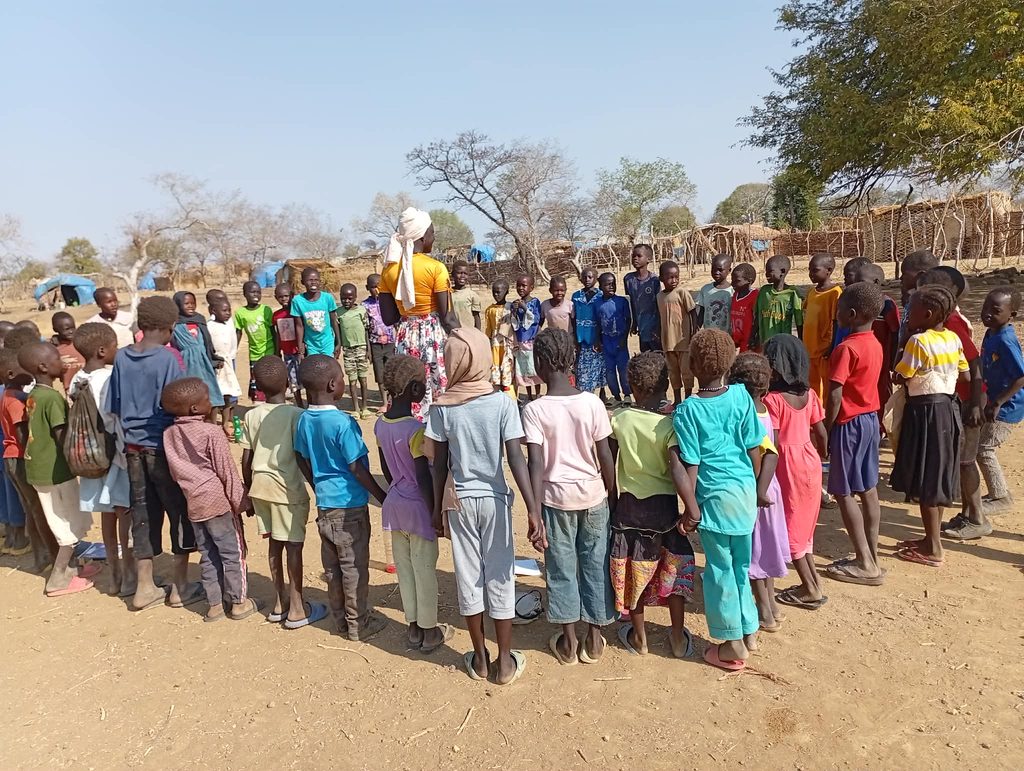
Children need dependable adults and opportunities to play, learn and spend time with other children. TRAID calls for safe, voluntary group activities, including creative activities that do not pressure children to reveal painful experiences. Joining a circle or smiling in a photograph does not tell us whether a child has recovered.
Parents and other caregivers need support too. They should have somewhere to ask for help with their own worries and the everyday demands of caring for children during displacement. Children’s activities should be linked to safeguarding and referral services when needed.
.
What TRAID is calling for
TRAID calls on all parties to protect civilians in their homes, on displacement routes and in camps. Attacks affecting places of refuge and essential services must be independently investigated. Humanitarian workers need safe access, and survivors need protection from retaliation when they seek help or report abuse.
We ask donors and humanitarian partners to fund mental health and psychosocial support as a continuing part of the response, alongside food, shelter and healthcare. Funding should reach local responders and include counsellor supervision, confidential referrals and follow-up for people who need ongoing care.
Civilians should not have to wait until the war ends to receive care. They need support now, and they need violence to stop. Counselling cannot protect a family from a drone attack. Families must have somewhere safe to live and a real chance of recovery.
No responses yet