

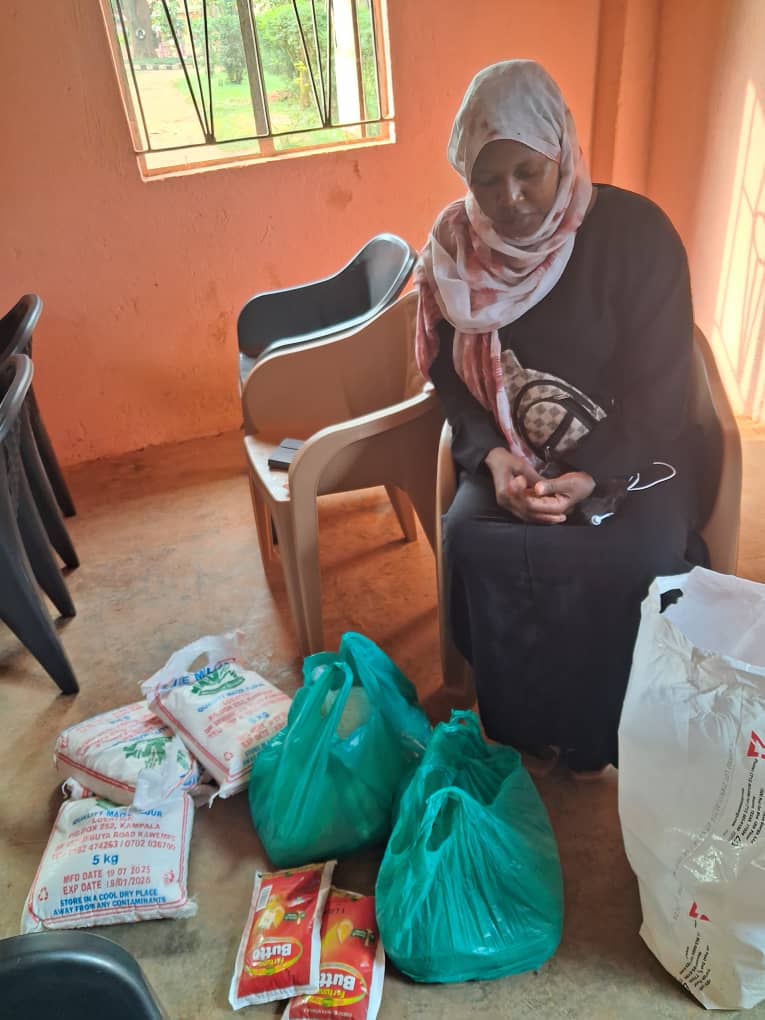
Mawahib is a Sudanese refugee currently living in Seeta Bajjo, Uganda, with her 3-year-old son and her 17-year-old sister. She fled Sudan in July 2024 due to the ongoing conflict, leaving her husband behind with the hope that he would join her later if the situation worsened.
After arriving in Uganda, Mawahib initially settled in Beyale refugee settlement for about two months before relocating to Seeta Bajjo in search of better living support from humanitarians organization.
In the early months, her husband continued to send her money for rent and basic needs. However, in March 2025, communication with him suddenly stopped. Since then, she has been unable to reach him and does not know whether he is alive or not. This uncertainty continues to weigh heavily on her.
Mawahib is a 24-year-old young mother who is now taking care of her child and her younger sister on her own. She is still young herself, still learning about life and responsibility, but now everything depends on her.
Losing contact with her husband has affected her deeply. It is not only the emotional pain, but also the uncertainty of not knowing where to start or what the future holds. She is trying her best to stay strong, but the worry and not having the answers make things more difficult every day.
Her story reflects the experience of many Sudanese women who were separated from their husbands during the conflict. These women now carry full responsibility for their families while living with the painful uncertainty of not knowing if their loved ones is alive or dead.
TRAID intervention
Mawahib has been attending counseling sessions at our survivors support center for the past one year. Through these sessions, she has slowly become more open and able to share her stories. Our social workers also continue to visit and follow up with her at home to check on her well-being.
She has been enrolled in our income-generating activities (Henna) program to help her start a small business and create a source of income. In addition, she receives monthly food support to help meet the basic needs of her family.
This support is made possible through the continued contributions of our supporters through the GoFundMe page. Without this kind of support, many vulnerable women like Mawahib would struggle to provide even the most basic needs for their children.
Currently, we are supporting around 400 women through counseling and empowerment programs. Many of them have experienced different forms of violence and continue to live with the effect of trauma caused by the ongoing conflict in Sudan.
Call to Action
Mawahib’s story is not an isolated case. It reflects the reality of many Sudanese women who continue to live with the impact of war, separation, and uncertainty. Sudan has not fully committed to international frameworks that protect and promote women’s rights, and as a result, many women remain without adequate protection or support. The effects of the conflict continue to fall heavily on them, and collective action is urgently needed.
As stated in the Convention on the Elimination of All Forms of Discrimination Against Women (CEDAW):
“States Parties shall take all appropriate measures to eliminate discrimination against women.”
This principle is a reminder that protecting and supporting women is not optional. It is a shared responsibility.
We call on International community to come together in support of Sudanese women like Mawahib. Support can take many forms, including funding for psychosocial services, livelihood programs, food assistance, and long-term recovery initiatives.
No responses yet