

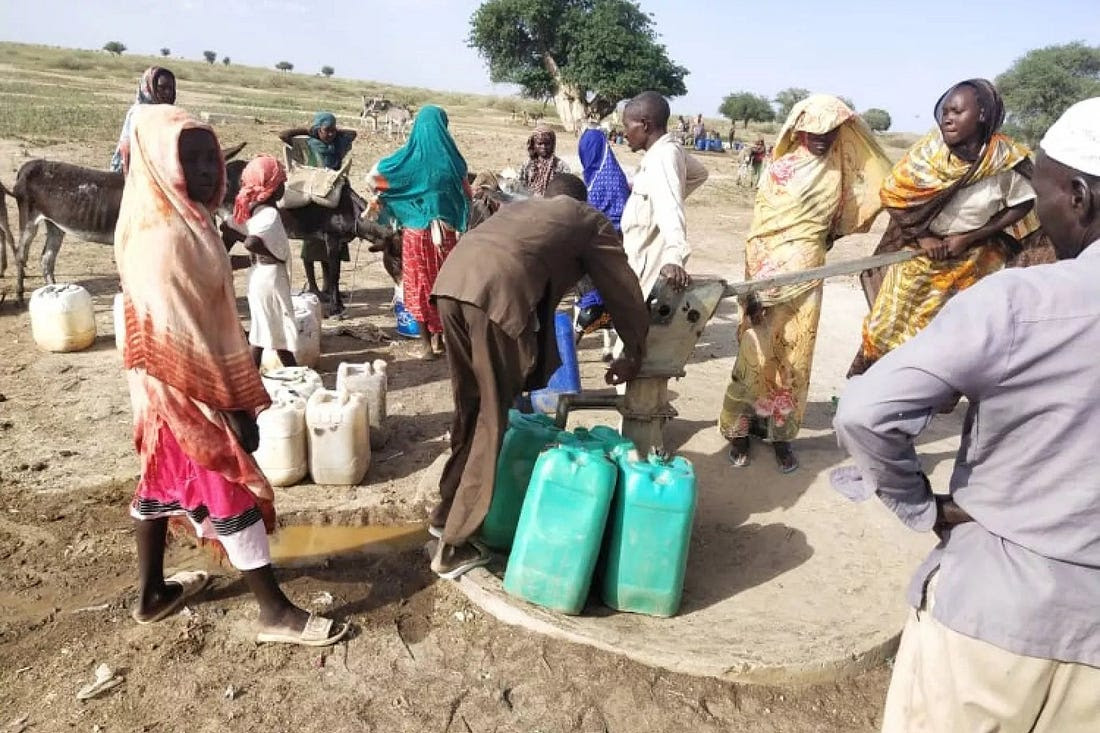
On the first day of Ramadan, at least 18 civilians, including young children, were killed when a drone strike hit a civilian water borehole in Umm Rusum village, West Kordofan State.
According to eyewitness accounts, local monitoring groups, and video evidence reviewed by independent observers, the strike occurred at approximately 1:00 pm local time. Families had gathered at the borehole to collect drinking water when the attack struck. Children as young as two and three years old were reportedly among those killed.
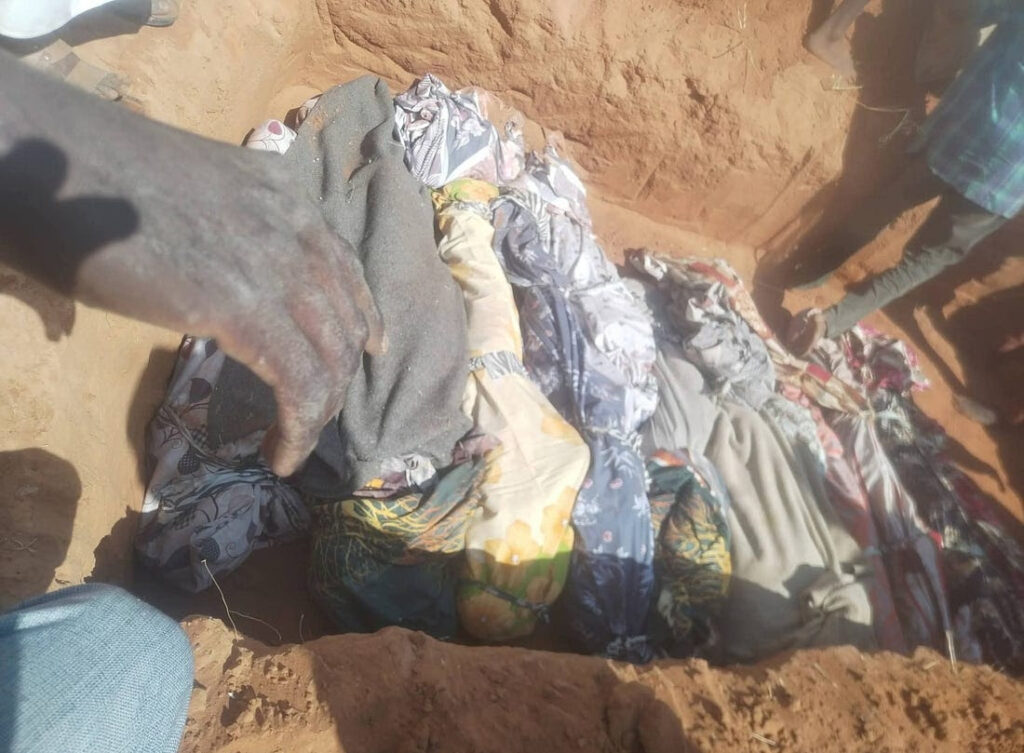
In rural West Kordofan, water boreholes are not just infrastructure. They are essential for survival. Women, children, and elderly residents gather daily to collect water for drinking, cooking, and livestock. On the first day of Ramadan, a time when families adjust their routines around fasting and preparing for the evening meal, the community instead faced devastating violence.
Civilian Site With No Known Military Presence
Witnesses described the borehole area as a civilian gathering place with no visible military presence. Video footage from the aftermath shows bodies lying near the well, alongside water containers, personal belongings, and livestock killed in the blast. The surroundings, including a water tank and household items, reflect a rural civilian settlement.
Local human rights monitors attributed the strike to a drone operated by the Sudanese Armed Forces. As of the time of publication, there has been no official statement from the military.
Under international humanitarian law, civilians and civilian infrastructure, including water sources, are protected from attack. Drinking water facilities are considered objects indispensable to the survival of the civilian population. Intentionally targeting such infrastructure may constitute a war crime.
Pattern of Drone Attacks on Civilian Infrastructure in Sudan
The Umm Rusum strike follows a growing pattern of drone attacks across West Kordofan and Darfur targeting displacement shelters, markets, and other civilian locations. Humanitarian agencies have confirmed that children have been among the victims in several recent incidents.
When water sources and markets are attacked, the consequences extend far beyond immediate casualties. Communities lose access to safe drinking water. Families are forced to flee again. Fear spreads quickly. The destruction of essential services deepens the humanitarian crisis already affecting millions across Sudan.
Impact on Children: Trauma and Psychosocial Harm
Children exposed to armed conflict often experience severe psychological distress. Survivors of airstrikes may suffer from.
Nightmares and sleep disturbance
Anxiety and fear of open spaces
Bedwetting and developmental regression
Withdrawal, silence, or sudden aggression
Long-term grief after witnessing death
When a place considered safe, such as a water borehole, becomes the site of violence, a child’s sense of security is shattered. Ordinary daily activities begin to feel dangerous. The first day of Ramadan, intended to be a time of reflection and community, has now become a memory of loss for many families in Umm Rusum.
West Kordofan communities are already facing displacement, food insecurity, and limited access to medical care. Psychosocial support services remain scarce. Many families are left to cope with overwhelming grief without professional support.
Legal Obligations to Protect Children
International humanitarian law and the Convention on the Rights of the Child require all parties to armed conflict to protect children and civilians from harm. The principles of distinction and proportionality obligate armed actors to distinguish between military targets and civilian objects.
A water borehole serving multiple villages is a civilian object. Any attack on such infrastructure raises serious concerns regarding compliance with international law.
Call for Urgent International Action
Trauma Rescue Aid calls for immediate international intervention to protect civilians and prevent further attacks on essential infrastructure in Sudan.
We urge:
- The United Nations Security Council to urgently address the protection of civilians in Sudan.
- The United Nations and African Union to strengthen civilian protection and monitoring mechanisms in affected areas.
- Independent international investigators to document and examine attacks on civilian infrastructure.
- Donor governments to increase funding for emergency child protection and psychosocial support services in West Kordofan and Darfur.
Children in Sudan must not continue to pay the price of war.
A Community in Grief
Behind the number 18 are children with names, families, and futures that were cut short. Mothers who went to collect water are now mourning their sons and daughters. Survivors carry not only physical injuries, but invisible wounds that may last a lifetime.
Protection of children in Sudan must become an urgent priority.
Children deserve water without fear.
They deserve safety without conditions.
They deserve a future beyond conflict.
No responses yet